
Blog
July 06,2026
What Is Cosmetic Bottle Spray Coating?
Cosmetic bottle spray coating is a surface finishing process that uses professional spraying equipment to apply paint evenly onto the surface of a bottle or container. The coating is then cured through high-temperature baking or UV curing, allowing it to firmly adhere to the outer surface of the container. This process provides decorative, protective, and value-enhancing effects.
In addition to improving appearance, spray coating also offers the following advantages:
Enhances brand recognition
Adds a premium look and feel
Improves wear and scratch resistance
Strengthens alcohol and chemical resistance
Extends the service life of packaging
Can be combined with printing and hot stamping processes
As a result, many skincare, medical aesthetics, and perfume brands worldwide widely adopt spray coating technology.
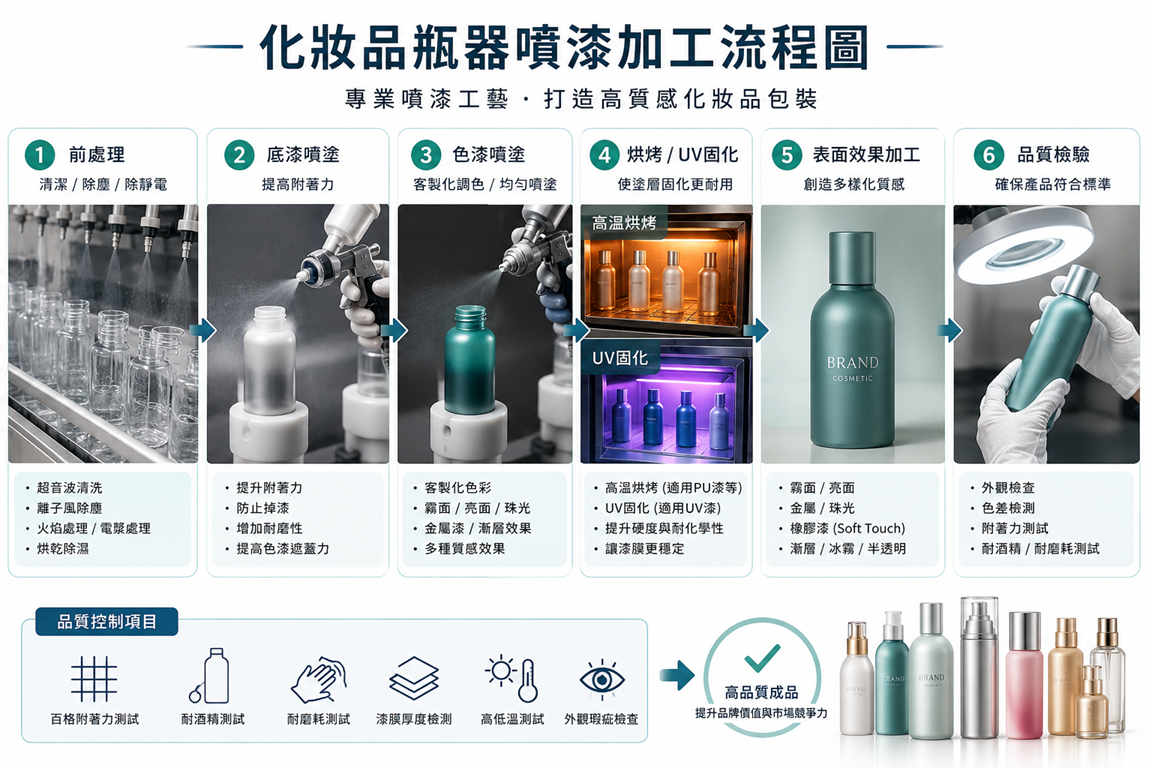
Cosmetic Bottle Spray Coating Process
A high-quality cosmetic bottle requires a complete and rigorous production process.
- Bottle Pretreatment
Pretreatment is one of the most important steps affecting spray coating quality.
If oil, dust, or static electricity remains on the bottle surface, it may cause poor adhesion, cratering, fisheyes, peeling, and other defects.
Common pretreatment methods include:
Ultrasonic cleaning
Deionized water cleaning
Static dust removal
Flame treatment
Plasma treatment
Drying and dehumidification
Proper pretreatment can significantly improve coating adhesion and product yield.
- Primer Application
For plastic materials such as PET, PETG, PP, and ABS, primer is usually applied before color coating.
The main functions of primer include:
Improving adhesion
Preventing paint peeling
Enhancing wear resistance
Increasing the hiding power of the color coat
For glass bottles, primer application depends on specific product requirements.
- Color Coating
Color coating is a key stage that determines the final appearance of the product.
Colors can be customized according to brand-specified color systems, such as:
Pantone color chart
RAL color chart
Customized brand colors
A wide variety of effects can be achieved, including:
Matte finish
High-gloss finish
Pearl effect
Metallic texture
Gradient color
Semi-transparent effect
Frosted effect
Candy transparent coating
With automated spray coating equipment, color consistency and production quality can be effectively improved.
- UV Curing or High-Temperature Baking
After spraying, the coating must be cured according to the type of paint used.
Common curing methods include:
UV Curing
Suitable for UV coatings.
Advantages include:
Fast curing speed
High production efficiency
Excellent surface hardness
Energy saving and environmentally friendly
High-Temperature Baking
Suitable for PU and acrylic coatings.
This process forms a more stable coating film, improving wear resistance and chemical resistance.
- Post-Processing
After spray coating is completed, various surface finishing processes can be further applied.
Common combinations include:
Silk screen printing
Gold or silver hot stamping
Heat transfer printing
UV printing
Laser engraving
Electroplating
Water transfer printing
Laser-engraved matte effects
Through multiple finishing processes, packaging with stronger brand identity can be created.
Common Spray Coating Effects for Cosmetic Bottles
Matte Finish
Matte bottles have become increasingly popular among premium skincare brands in recent years.
Features:
Soft texture
Fingerprint resistance
Premium and minimalist appearance
Medical aesthetics style
High-Gloss Finish
High-gloss coating provides a highly reflective surface.
Suitable for:
Makeup products
Haircare products
Youth-oriented brands
Metallic Spray Coating
Special metallic paint is used to create an aluminum-like texture.
Common color options include:
Champagne gold
Rose gold
Matte silver
Space gray
Black titanium
This effect can significantly enhance the luxury feel of the product.
Pearl Spray Coating
By adding pearlescent powder, the surface can create a delicate and refined shine.
Suitable for:
Perfume bottles
Serum bottles
Premium skincare series
Gradient Spray Coating
Gradient coating uses different colors to create a smooth transition.
Features include:
Rich visual depth
High brand recognition
High customization flexibility
Applicable Bottle Materials
Cosmetic spray coating can be applied to a wide range of materials, including:
Glass bottles
PET
PETG
AS
ABS
Acrylic (PMMA)
PP
PE
Different materials require different primers and processing conditions to ensure optimal adhesion.
Quality Inspection Standards
Professional spray coating factories usually implement complete quality management procedures.
Inspection items include:
Cross-cut adhesion test
Alcohol resistance test
Abrasion resistance test
Coating thickness test
Color difference inspection
Gloss measurement
High- and low-temperature cycle test
Appearance inspection, including runs, orange peel, cratering, and pinholes
Comprehensive quality control can effectively reduce defect rates while improving product consistency and customer satisfaction.
How to Choose a Professional Cosmetic Bottle Spray Coating Factory
When selecting a processing partner, the following factors should be evaluated:
Whether the factory has automated spray coating equipment
Whether it has a dust-free spraying environment
Whether it provides customized color matching services
Whether it has a complete quality inspection process
Whether it has experience in cosmetic packaging processing
Whether it can integrate printing, hot stamping, assembly, and other post-processing services
Whether it can support both small-batch sampling and mass production requirements
A factory with complete process capabilities can effectively shorten product development time and ensure stable product quality.
Conclusion
Cosmetic bottle spray coating is not only a packaging beautification process but also an important technology for enhancing brand value. Through professional pretreatment, precision spraying, proper curing, and strict quality inspection, brands can create high-quality packaging that combines aesthetics, durability, and functionality.
As the market places increasing emphasis on environmental protection and sustainability, spray coating technology will continue to evolve toward low-VOC coatings, water-based paints, energy-saving processes, automated production, and smart manufacturing. This will help brands balance aesthetics, quality, and environmental responsibility while creating more competitive cosmetic packaging.
Frequently Asked Questions (FAQ)
Q1: What materials can be used for cosmetic bottle spray coating?
Spray coating can be applied to glass, PET, PETG, PP, PE, ABS, AS, and PMMA (acrylic). However, different materials require different primers and processing conditions to ensure adhesion and durability.
Q2: What is the difference between matte spray coating and gloss spray coating?
Matte spray coating creates a subtle, refined, and fingerprint-resistant texture, making it ideal for premium skincare products. Gloss spray coating offers high shine and vivid color, making it more suitable for makeup products or youth-oriented brands.
Q3: Can additional processing be done after spray coating?
Yes. After spray coating, bottles can still be combined with silk screen printing, gold or silver hot stamping, heat transfer printing, UV printing, laser engraving, electroplating, and other processes to enhance visual depth and brand recognition.
Q4: How can spray coating quality be ensured?
In addition to selecting suitable paints and equipment, quality can be ensured through multiple inspections, including cross-cut adhesion testing, alcohol resistance testing, abrasion resistance testing, color difference inspection, gloss measurement, and appearance inspection.